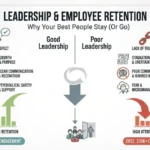


Here is an observation that most senior HR professionals in India will recognise: the leadership pipeline conversation in their organisation is almost always running two or three years behind the business growth conversation. Revenue targets get set, expansion plans get approved, and then someone quietly realises that the managers currently in place were developed for an organisation that was significantly smaller and simpler than the one they are now being asked to lead. This development work has become one of the most strategically urgent investments in the Indian corporate context, precisely because so many organisations have outgrown their leadership bench faster than they have been able to develop it.
The search for quality leadership programmes in India has never been more active, and the range of providers has never been more varied. That variety is genuinely useful, but it also creates its own challenge. Knowing which provider is actually right for your organisation, your sector, the specific capability gaps you are trying to close, and the cultural context your leaders work in is harder than it sounds when every provider makes broadly similar claims about their impact and their methodology. This guide is an attempt to cut through that noise with something more honest and more useful than a generic list.
This kind of development investment in India is a market worth several thousand crore rupees and growing at an accelerating rate as organisations recognise that leadership quality is one of the clearest differentiators between companies that scale successfully and those that plateau. The providers operating in this space range from global firms with deep India operations to homegrown specialists who have built their entire practice around the specific realities of the Indian corporate environment. Both have a place. Understanding what distinguishes one from another, and what each type of provider is actually best suited to deliver, is the real starting point for making a good investment in leadership development work.
What to Actually Look for in Leadership Training Providers in India
Before getting into specific providers, it is worth being clear about what a good developing leaders here partner actually looks like in practice. The criteria that matter are more specific and more useful than reputation, brand recognition, or client list length.
Contextual relevance. This is the criterion that most commonly gets overlooked in provider selection. Leadership programmes developed for Western corporate environments do not always translate cleanly into the Indian context, where hierarchical dynamics, multi-generational workforce management, family-owned business structures, and the specific pace of growth in Indian sectors all create leadership challenges that have their own texture. Leadership programme providers who have genuine experience working with Indian organisations, who understand the specific pressures facing leaders in Indian IT services, manufacturing, BFSI, healthcare, and professional services, are a different proposition from those applying a global framework that was not designed with those realities in mind.
Evidence of sustained behaviour change, not just participant satisfaction. The training industry has a well-documented tendency to measure success through immediate post-programme satisfaction scores, which are almost entirely uncorrelated with actual leadership behaviour change six months later. The providers worth engaging for serious the development work in this market work are the ones who measure outcomes in terms of observable behaviour change, 360-degree feedback comparisons before and after intervention, and the downstream metrics that indicate whether developed leaders are performing differently, not just rating the programme highly.
Facilitation quality at senior levels. Leadership programmes for mid-level managers and those for senior and C-suite leaders are fundamentally different design challenges. Senior leaders will not engage productively with facilitation that feels junior, formulaic, or insufficiently challenging. The best leadership and management training providers for senior leadership interventions here have facilitators who can hold their own intellectually with experienced senior executives, who have personal experience of the kind of decisions senior leaders face, and who can run a room full of VPs and MDs without losing credibility in the first hour.
Programme architecture, not just content. Single-event training rarely produces lasting leadership change. The research on this is clear enough that any serious leadership capability in Indian organisations provider should be offering multi-touchpoint journeys that include pre-work, spaced learning events, between-session application assignments, peer accountability structures, and structured reflection rather than a standalone two-day workshop. Ask every potential provider how they architect for behaviour transfer, not just for knowledge transfer.
Top Leadership Training Companies India: Who They Are and What They Actually Do
BYLD Group
BYLD Group is one of India’s most established names in this investment in Indian leadership and has been operating in the space for several decades. Their portfolio covers leadership development, team effectiveness, and culture transformation, with the Franklin Covey partnership being among their most well-known offerings. The 7 Habits of Highly Effective People framework and its organisational applications have been delivered through BYLD to hundreds of Indian corporate clients. What distinguishes them from pure content licensees is the depth of facilitation expertise and the ability to contextualise globally developed frameworks for Indian audiences. For leadership capability building programmes that need the credibility of a globally recognised methodology delivered by facilitators who understand the Indian corporate environment, BYLD is one of the strongest options in the market.
Centre for Creative Leadership (CCL)
CCL is one of the most rigorously research-backed names in global building leadership capability locally. Their India presence has grown substantially and their programmes for senior and high-potential leaders are among the most respected in the market. What CCL brings that many providers do not is a genuine science base. Their research into leadership effectiveness, derailment factors, and the developmental experiences that actually build senior leadership capability informs their programme design in ways that are visible to anyone who has been through their work. For organisations willing to invest at the premium end of leadership work in this context for their senior leadership cohorts, CCL consistently ranks among the strongest choices.
Korn Ferry
Korn Ferry has built one of the most integrated leadership assessment and development offerings in the market. Their approach to leadership growth in the Indian context is anchored in their proprietary Korn Ferry Assessment and the Lominger competency framework, which gives their programmes a data-backed quality that makes them particularly strong for organisations wanting to connect leadership development directly to succession planning, talent calibration, and performance management. The assessment data produced through Korn Ferry engagements gives HR leaders something genuinely actionable for talent decisions beyond the programme itself. For large Indian corporates and MNCs with Indian operations, Korn Ferry is among the leading providers in this space that consistently appears on shortlists for senior leadership work.
Right Management (ManpowerGroup)
Right Management brings a workforce consulting perspective to leadership training India, which makes their offering particularly relevant for organisations at significant inflection points such as restructuring, mergers, rapid scale-up, or leadership pipeline rebuilding after attrition. Their strength is in connecting leadership development to broader talent strategy rather than delivering standalone programmes. For Indian organisations where leadership capability gaps are symptomatic of deeper structural issues in how talent is developed and retained, Right Management’s consulting-led approach to this development challenge is more useful than a pure training solution.
Talent Transformation (Eagles Flight India)
Eagles Flight has built a distinctive place in the Indian the development market here market through its experiential learning methodology. Their programmes use carefully designed outdoor and scenario-based experiences to surface leadership dynamics in ways that traditional classroom formats cannot. The learning is anchored in experience rather than instruction, which tends to produce different kinds of engagement and retention, particularly for leadership teams that have been through conventional classroom programmes and need a different kind of intervention. For team effectiveness work alongside individual leadership training India, their experiential approach is worth serious consideration.
XLRI Executive Education and IIM Programmes
India’s premier business schools have invested significantly in the broader development conversation programmes for working executives. XLRI’s PGCHRM and executive leadership programmes, the IIMs’ senior management programmes, and ISB’s leadership offerings all bring the credibility of institutional affiliation alongside genuinely strong faculty. These are among the well-regarded providers for Indian organisations that want their leaders to carry the signal of prestigious institutional development alongside the content itself. The limitation of institutional programmes is customisation. They are typically open-enrolment formats rather than bespoke organisational interventions, which means the content is not designed around your organisation’s specific leadership challenges.
Mercer Learning and Spencer Stuart
For organisations at the senior and executive level, Mercer Learning and Spencer Stuart offer leadership training India that is closely integrated with their talent advisory and executive search capabilities. The depth of their understanding of what makes senior leaders effective, and what causes them to derail, comes from decades of observation across hundreds of executive placements and talent advisory engagements. Their leadership development India work for C-suite and board-level leaders carries a sophistication that reflects that accumulated insight. For Indian conglomerates, large family businesses transitioning leadership, and MNCs investing in senior Indian leadership, these are providers worth evaluating seriously.
How to Evaluate Top Leadership Training Companies India for Your Organisation
The process most organisations use to select leadership development India providers is less rigorous than the decisions they are making about everything else in their business. Budget allocations of Rs 50 lakh to Rs 2 crore or more for leadership programmes often rest on relationships, brand impressions, or word of mouth rather than on structured evaluation against specific requirements. Here is what a better evaluation process looks like.
Start with a precise problem definition. The most common reason leadership training India disappoints is that the brief given to the provider was too vague. ‘We need to develop our leaders’ is not a brief. ‘We have forty first-time managers who were promoted in the last eighteen months, most of them from individual contributor roles, and they are struggling with conflict resolution, delegation, and building accountability in their teams’ is a brief. The more specific your problem definition, the better equipped any provider is to tell you honestly whether their offering actually addresses it.
Ask for evidence, not case studies. Case studies are marketing. Ask leading firms in this space for actual outcome data. What was measured before and after this programme? What changed in the 360-degree feedback scores of participants? How long after the programme did the measurement occur? Providers who cannot answer these questions with specific data rather than testimonials are not necessarily poor, but they have not built the evidence base that should be expected from serious leadership development India investment.
Meet the actual facilitators. The brand you are buying is often not the person who walks into your room on programme day. In the selection process, insist on meeting the specific facilitators who will be running your programme. Ask them challenging questions. See how they handle being pushed back on. The quality of the facilitation is the primary driver of whether senior leaders engage seriously with the content, and leadership and management training providers vary enormously in facilitator depth below the headline names they put forward in pitches.
Evaluate the architecture for transfer. Ask every provider how they ensure that what is learned in the programme actually shows up in behaviour back at work. A programme without a structured transfer architecture is a learning event, not a leadership development India initiative. The providers who take this seriously have specific answers. The ones who do not tend to change the subject back to the content quality.
The Specific Context of Leadership Development India: Why It's Different
Leadership Development India has specific characteristics that distinguish it from leadership development in more mature markets, and the providers worth evaluating who understand those characteristics deliver fundamentally different work from those who are simply importing global programmes without adaptation.
The pace of promotion in India’s growth-driven corporate landscape means that many leaders are managing at a scale and complexity level they have not been developed for. It is genuinely common for someone to be managing a team of fifty within four or five years of starting work, without having had formal management development at any earlier stage. This creates a particular leadership training India challenge: developing leaders who are already experienced and confident in their roles but have significant and often unconscious gaps in how they manage people, build teams, and navigate organisational complexity.
The multi-generational workforce dynamic is another India-specific challenge. Leading a team in an Indian organisation often means managing people who are both significantly older and significantly younger than you, sometimes simultaneously. The hierarchical expectations differ across generations. The communication norms differ. The relationship between authority and performance looks different at different generational levels. Quality leadership development India in India addresses this directly rather than assuming a homogeneous leadership context.
Family-owned business leadership transitions represent a uniquely significant category of leadership training India in India. India has an enormous number of family businesses at significant scale, and many are at inflection points where the founding generation is transitioning to a professional management structure or to the next family generation. The leadership development challenges in these contexts, how to build professional management capability in organisations built around founder authority, are genuinely distinctive and require providers with specific experience in this area.
The demand for leadership development India that addresses digital leadership, cross-cultural leadership for organisations expanding globally, and sustainability-linked leadership is growing rapidly in the Indian market. The top leadership training companies India keeping pace with these needs are the ones investing in programme design that reflects where Indian business is actually going, not just where it has been.
Strengthen Leadership. Reduce Attrition. Retain Your Best Talent.
High performing teams start with high-quality leaders. Invest in leadership development programs that build communication, emotional intelligence, and accountability, so your people choose to stay and grow with you.
Explore Leadership Development SolutionsThe ROI of Leadership Development India: Making the Investment Decision
Leadership development India investment decisions in India are often made on intuition and budget availability rather than on a rigorous ROI framework. That is partly because measuring leadership development ROI is genuinely difficult, and partly because many providers have not built the evaluation infrastructure that would support it. But the cost of not investing is also real and largely invisible until it becomes a crisis.
The tangible cost of weak leadership in Indian organisations shows up in three main places. First, attrition: Gallup’s research consistently shows that people leave managers, not companies, and leadership quality is one of the top three drivers of voluntary attrition. Replacing a mid-level professional in India costs between Rs 2 lakh and Rs 8 lakh when you account for recruitment, onboarding, and the productivity gap during transition. An organisation losing twenty strong contributors a year due to poor management is spending Rs 4 crore to Rs 16 crore on a problem that serious leadership development India could substantially reduce.
Second, there is the cost of leadership derailment at senior levels. When a senior leader fails in a new role, the direct cost in compensation, executive search, and transition management is significant. The indirect cost in team disruption, client relationship impact, and delayed strategic execution is often larger. Well-designed leadership training India that builds self-awareness, stakeholder management capability, and strategic thinking in senior leaders reduces derailment rates in ways that are worth modelling explicitly rather than treating as unquantifiable.
The third cost is opportunity cost: the revenue and market share that organisations miss because their leaders are not capable of executing on strategic ambitions that the business is otherwise positioned to pursue. This is the hardest to quantify and the most compelling argument for treating leadership development India as a strategic investment rather than a training budget line. The leadership and management training providers who make the strongest business cases frame their work in these terms, because the conversation is not about what the training costs but about what inadequate leadership capability is costing the organisation right now and every year it persists.
The organisations that get the most from their top leadership training companies India relationships are the ones that treat them as partners in a multi-year capability building effort rather than vendors for a periodic programme event. They share context. They allow providers to see the actual leadership challenges the organisation faces. They measure outcomes seriously. And they build accountability for leadership development into the performance expectations of the leaders themselves, not just the L&D team that is trying to support them.
Finding the right leadership training India partner is not a single procurement decision. It is the beginning of a relationship that should evolve as the organisation grows and the leadership challenges it faces become more complex. The providers worth engaging are the ones who are honest about what they are good at and what they are not, who bring evidence rather than just enthusiasm, and who are genuinely interested in the specific outcomes your organisation is trying to achieve rather than in fitting you into a programme that already exists. Those providers exist in India. This guide is one starting point for finding them.