

Article Content
Think about the best boss you’ve ever had. Chances are, you didn’t just admire them because they were smart or experienced,you admired them because of how they led. The way they communicated with the team, how they handled pressure, whether they invited your input or made decisions solo, All of that comes down to one thing: their leadership styles.
Now think about the worst boss. Maybe they micromanaged every task. Maybe they never gave clear direction. Maybe they played favorites or shut down ideas before they had a chance to breathe. Again, all of that? Leadership style.
The truth is, leadership styles don’t just shape how a workplace feels. They directly impact productivity, morale, innovation, retention, and the overall performance of a team. Understanding them isn’t just useful for people in management roles ,it’s valuable for anyone who works with people, leads projects, or aspires to grow in their career.
In this guide, we’re going to break down everything you need to know: the types of leadership styles, how each one plays out in real teams, what the research actually says, and how to figure out which approach fits you and your situation best.
What Are Leadership Styles, and Why Do They Matter So Much?
Before we get into the specifics, let’s make sure we’re on the same page about what leadership styles actually are.
A leadership style is essentially your default approach to leading people. It’s the pattern of behaviors, attitudes, and decisions you lean on when guiding a team. Some leaders are collaborative by nature. Others are directive. Some lead by inspiration, others by systems and accountability. These tendencies aren’t random ,they’re shaped by personality, experience, organizational culture, and the specific challenges a leader faces.
But here’s where it gets interesting: leadership styles are not fixed. The best leaders are self-aware enough to recognize their natural tendencies and flexible enough to adapt when the situation demands something different. That’s what separates good managers from truly great ones.
The impact of leadership styles on team performance is well-documented. A study published in the Harvard Business Review found that leadership accounts for up to 70% of variation in team climate,and team climate, in turn, drives up to 30% of business results. Those are not small numbers. The way someone leads genuinely changes how a team functions, how people feel about their work, and whether or not goals get achieved.
What Are the Different Leadership Styles? A Real-World Breakdown
What are the different leadership styles that you’ll actually encounter in workplaces today? There are several well-recognized frameworks, but rather than giving you a dry textbook list, let’s look at each one through the lens of real teams and real outcomes.
1. Autocratic Leadership
Autocratic leaders make decisions independently, set clear expectations, and maintain tight control over processes. There’s not much room for debate or input from the team ,the leader decides, and the team executes.
This might sound like a recipe for low morale, and in many contexts it is. But autocratic leadership isn’t always a bad thing. In high-stakes, time-sensitive situations ,emergency response, military operations, manufacturing environments where safety is paramount ,a decisive, directive leader can be exactly what’s needed. The problem arises when this style is applied across the board, in every situation, with every type of team. Over time, employees start to feel undervalued. Creativity gets suppressed. Trust erodes.
The main point is that autocratic leadership styles can get things done quickly, but they often hurt the health and engagement of the team in the long run.
2. Democratic (Participative) Leadership
People who are in charge of the Democratic Party want everyone to work together. They ask team members what they think, encourage them to talk about things, and think about all the different points of view when making decisions. The leader still makes the final decision, but people feel like they are a part of the process and that their voices are heard.
This is one of the most popular and effective ways for leaders to lead in modern businesses, and for good reason. People are more likely to follow through on decisions when they have a say in them. They own it. They are more likely to report problems early because they feel safe doing so. There is usually more teamwork and more new ideas.
The bad part? Democratic leadership can take a long time. Too much consultation can cause confusion and delays when time is of the essence or when the team is new and needs clear direction. Wise leaders know when to let people speak and when to just make a decision.
3. Transformational Leadership
Leaders who are transformational have a vision. They paint a clear picture of the future, encourage people to aim higher, and question the way things are now. These are the kinds of leaders who really make you believe in what you’re working on together.
Many people think that this is one of the best ways for leaders to get people to come up with new ideas and help their companies succeed over time. Transformational leaders care a lot about helping their people grow. They don’t force team members to go outside their comfort zones; instead, they make them want to. The result is usually more engagement, better performance, and less turnover.
The caveat: Transformational leadership requires emotional intelligence, strong communication skills, and a genuine ability to inspire. When it’s done poorly, it can feel like empty cheerleading. And without clear structure to back up the vision, teams can feel energized but directionless.
4. Transactional Leadership
Transactional leadership is based on a clear deal: if you do a good job, you will be rewarded. If you don’t do what you said you would, there will be consequences. It is a style that focuses on results and holds people accountable. It relies on structure, clear expectations, and regular checks.
Among the different types of leadership styles, this one tends to work well in environments where tasks are well-defined and measurable ,sales teams, production floors, customer service departments. People generally understand what’s expected and how their performance is evaluated.
Where transactional leadership falls short is in fostering creativity or adaptability. When the primary motivation is reward and punishment, intrinsic motivation can dry up. Employees start doing exactly what’s required ,no more, no less. If you want a team that goes above and beyond, purely transactional leadership styles won’t get you there.
5. Servant Leadership Essentials™
Servant leaders flip the traditional hierarchy. Instead of the team serving the leader’s agenda, the leader serves the team. Their primary focus is on supporting, developing, and empowering the people they lead ,clearing obstacles, providing resources, and making sure everyone has what they need to do their best work.
This method has become very popular in the last few years, especially in industries that rely on knowledge and organizations that are based on values. When leaders really care about their team’s well-being, something amazing happens: people trust each other more, feel safer at work, and bring their whole selves to work. These are strong conditions for doing well.
Among the types of leadership styles, Servant Leadership Essentials™ often produces exceptional long-term results, though it requires a strong sense of confidence and ego-security from the leader. Leaders who are too focused on being liked, rather than genuinely serving, can struggle to make the tough calls that leadership sometimes demands.
6. Laissez-Faire Leadership
Laissez-faire leaders take a hands-off approach. They provide minimal direction, trust their team members to self-manage, and intervene only when absolutely necessary.
For highly experienced, self-motivated teams working on creative or independent projects, this style can actually produce great results. Talented professionals often don’t want to be micromanaged ,they want the freedom to do their work their way. Laissez-faire leadership styles can unlock that freedom.
But for teams that need guidance, structure, or accountability, laissez-faire leadership often slides into neglect. Without adequate direction, newer team members can feel lost, standards can slip, and the team can drift without clear goals. It’s a style that only works in the right conditions.
7. Affiliative Leadership
Affiliative leaders put relationships and people first. Their main goal is to build emotional connections, make the team work well together, and make sure that everyone feels valued and included. They are the kind of leaders who see when someone is having a hard time and take the time to check in.
This approach is particularly effective during periods of team stress, conflict, or rebuilding after a setback. Among the types of leadership styles, the affiliative approach creates an environment where people feel psychologically safe ,and that safety is the foundation for honest communication, collaboration, and creativity.
The risk is that an overemphasis on harmony can make it difficult to address performance issues or make unpopular decisions. Leaders who lean too heavily on affiliation may avoid necessary conflict, allowing problems to fester rather than be resolved.
8. Coaching Leadership
Coaching leaders are invested in the long-term development of their team members. They focus on helping people identify their strengths and areas for growth, setting development goals, and providing ongoing feedback and support.
Among the different leadership styles, coaching leadership tends to produce some of the strongest results when it comes to employee engagement, retention, and career growth. People who feel genuinely invested in are more loyal and more motivated. They’re also more likely to develop into strong future leaders themselves.
The challenge is that effective coaching takes time, patience, and genuine skill. Leaders who are great individual contributors but lack coaching ability can sometimes struggle with this approach. And in fast-paced environments where results are needed immediately, the longer development arc of coaching can feel like a luxury.
Read More – What is Servant Leadership Essentials™ and how can it empower your team?
How Leadership Styles Shape Team Performance: The Research
It’s one thing to describe different leadership styles in theory. It’s another to understand what they actually do to teams in practice.
Research consistently shows that the relationship between leadership styles and team outcomes is significant and measurable:
- Transformational leadership has been linked to higher levels of team creativity, organizational commitment, and overall performance across multiple industries and contexts.
- Democratic leadership consistently correlates with higher team satisfaction and lower turnover, particularly in professional and knowledge-based environments.
- Autocratic leadership, while effective in certain short-term situations, is associated with higher stress, lower intrinsic motivation, and increased employee burnout over time.
- Servant Leadership Essentials™ has a strong correlation with employee wellbeing, job satisfaction, and organizational citizenship behavior,meaning people go beyond their job description to contribute to the team.
- Coaching leadership produces the highest gains in employee development and performance improvement over the long term.
What the research also reveals is that the most effective leaders don’t rigidly stick to one style. They’re situationally aware, adapting their approach based on the needs of the individual, the team, and the moment. This concept, often called situational approach to leadership,is perhaps the most valuable insight that leadership studies have produced.
The Impact of Leadership on Employee Morale and Engagement
If you’ve ever had a leader who made you feel genuinely valued, you know how much of a difference it makes. You show up differently. You care more. You’re willing to put in extra effort because the work feels meaningful and the environment feels safe.
The opposite is equally true,and perhaps more powerful. Research from Gallup consistently shows that managers account for at least 70% of the variance in employee engagement scores. The way leadership styles play out on a day-to-day basis has a direct, measurable impact on how employees feel about their jobs, their colleagues, and the organization.
Good leadership builds psychological safety ,the belief that you can speak up, take risks, make mistakes, and share ideas without fear of negative consequences. Teams with high psychological safety outperform those without it on nearly every dimension: creativity, problem-solving, collaboration, and adaptability. And psychological safety is, fundamentally, a product of effective leadership styles that prioritize trust and openness.
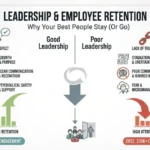
When leaders communicate clearly, recognize contributions, offer development opportunities, and model the behaviors they expect, employees respond. Engagement goes up. Absenteeism goes down. Retention improves. Performance follows. This isn’t idealistic ,it’s what the data shows, consistently, across industries and geographies.
Types of Leadership Styles Across Different Work Environments
One important reality about types of leadership styles is that what works brilliantly in one context can completely fall apart in another. Leadership isn’t one-size-fits-all. Let’s look at how different environments call for different approaches.
1. Startups and High-Growth Teams
Fast-moving startup environments often benefit from transformational leadership styles. When the team is small, highly motivated, and united around a shared vision, leaders who inspire, energize, and give people autonomy tend to unlock the best performance. Bureaucratic or overly transactional styles can feel suffocating in environments that reward speed and creativity.
2. Large Corporate Organizations
In larger organizations with complex structures, a mix of types of leadership styles is often required across different levels. Senior leaders may lean transformational or visionary; middle managers may blend democratic and coaching approaches; team leads in structured departments may incorporate transactional elements to maintain accountability and consistency.
3. Remote and Distributed Teams
Remote work has fundamentally changed the demands placed on leaders. Without physical presence, different leadership styles take on new dimensions. Micromanagement becomes even more damaging when people are working from home ,it signals distrust and quickly destroys morale. Servant and coaching leadership styles tend to work best in remote environments because they emphasize trust, development, and genuine investment in the individual.
4. High-Pressure or Crisis Situations
When things go wrong ,a product launch fails, a key client is lost, a team is under extreme deadline pressure ,the demands on leadership styles shift. In these moments, people often need clarity, decisiveness, and reassurance more than anything else. More directive styles, used thoughtfully and temporarily, can provide the structure and stability a team needs to get through a difficult period.
Read More – What is Leadership? Definition, Significance and Theories
Dynamic Leadership: Adapting Your Style to What the Moment Demands
Dynamic leaders don’t cycle through different leadership styles randomly. They develop a sophisticated read of situations: What does this person need right now? What does this team need in this moment? Is this a time for inspiration or instruction? For challenge or support? For autonomy or guidance?
This kind of adaptability is rooted in emotional intelligence ,the ability to read people, manage your own reactions, and respond to the emotional reality of a situation rather than just the technical facts of it. Leaders with high emotional intelligence tend to be more effective across a wider range of situations because they can flex between types of leadership styles fluidly and authentically.
Developing dynamic leadership takes time, self-reflection, and a willingness to be honest about your blind spots. Many effective leaders seek out feedback from their teams, work with coaches, or deliberately practice styles that don’t come naturally to them. The discomfort of growth is, itself, a form of leadership.
How to Choose the Right Leadership Style for Your Team
How to choose the right leadership style is arguably the most practical question any leader can ask ,and the answer is almost always: it depends.
That’s not a cop-out. It’s the honest truth of leadership. But there are several frameworks that can help you navigate the decision more deliberately.
1. Consider the Experience Level of Your Team
Newer team members typically need more direction and guidance. More directive effective leadership styles help them understand expectations, build skills, and develop confidence. As people grow in experience and competence, you can progressively shift toward more autonomous and collaborative approaches. Pushing autonomy on someone who isn’t ready for it doesn’t empower them ,it overwhelms them.
2. Assess the Nature of the Task
Creative, open-ended work benefits from leadership styles that encourage exploration and autonomy. Structured, process-driven work often benefits from clearer direction and accountability. A good leader reads the nature of the work and adjusts accordingly.
3. Read the Team's Emotional Climate
If the team is stressed, fractured, or recovering from a setback, affiliative leadership styles that focus on connection, support, and psychological safety should take priority. Once stability is restored, you can introduce more challenge and performance focus.
4. Be Honest About Your Own Defaults
Most leaders have a natural leadership style they default to under pressure. Knowing what that is ,and being honest about its strengths and limitations ,is the foundation of continued growth. If you default to autocratic tendencies when stressed, that’s worth knowing. If you avoid difficult conversations because you prioritize harmony, that’s worth acknowledging too.
5. Invite Feedback
The people on your team will often have the clearest view of how your leadership styles are landing. Formal 360-degree feedback, informal check-ins, or even just asking “what can I do better?” can surface insights that are genuinely transformative for your growth as a leader.
Common Leadership Style Mistakes (And How to Avoid Them)
Even well-intentioned leaders can fall into patterns that undermine team performance. Here are some of the most common pitfalls when it comes to types of leadership styles:
- Style rigidity: Using the same approach regardless of context, team, or situation. The leader who is always collaborative even in crises, or always directive even with expert teams, misses critical opportunities to serve their team effectively.
- Confusing style with identity: Some leaders become so attached to a particular style that they see feedback or suggestions to adapt as personal criticism. Great leadership is not about protecting your image ,it’s about serving your team.
- Neglecting the development dimension: Leaders who focus exclusively on task completion, without investing in the growth of their people, tend to build teams that are efficient in the short term but fragile over time.
- Misreading what the team needs: Sometimes leaders assume their team wants autonomy when they actually need more structure ,or vice versa. Regular communication is the only reliable way to stay calibrated.
- Inconsistency: Switching styles too erratically ,without transparency or explanation ,can make a leader seem unpredictable and undermine trust. When you shift your approach, it helps to be open about why.
Develop Leadership Styles That Drive Real Team Performance
Understanding leadership styles is just the first step. Equip your managers with the skills to adapt, inspire, coach, and lead with confidence—so your teams perform at their highest potential.
Explore Leadership Development ProgramsBuilding the Leadership Culture Your Organization Needs
Leadership is never just a personal issue ,it’s an organizational one. The types of leadership styles that dominate within an organization shape its culture, its reputation as an employer, and ultimately its performance.
Organizations that invest in developing diverse, context-sensitive different leadership styles across all levels tend to be more resilient, more innovative, and more attractive to top talent. They build cultures where people feel trusted, challenged, and supported ,and that’s a powerful competitive advantage.
Leadership development programs, coaching, mentoring, and honest performance feedback are all part of building this kind of culture. So is creating space for leaders to reflect, learn from mistakes, and evolve. The best leadership cultures don’t demand perfection ,they demand growth.
When effective leadership styles are modeled at the top and reinforced throughout an organization, something shifts. People start leading from wherever they sit. Junior employees take more initiative. Teams become more collaborative. Problems get surfaced rather than hidden. The organization becomes the kind of place where people genuinely want to work.
Quick Reference: Types of Leadership Styles at a Glance
Here’s a summary of the key types of leadership styles we’ve covered, along with their best-use scenarios:
Style Works Best When… Watch Out For…
- Autocratic Quick decisions needed, high-stakes situations Long-term morale, creativity suppression
- Democratic Team has experience, buy-in matters, no urgent deadline. Decision-making speed in crises
- Transformational Innovation and change are priorities Needs strong structure to complement vision
- Transactional Clear metrics, defined tasks, accountability focus .Intrinsic motivation, creativity
- Servant Building trust, development focus, long-term culture. Tough decisions, performance confrontations
- Laissez-Faire Highly skilled, self-motivated experts New or struggling team members
- Affiliative Team conflict, rebuilding trust, stress recovery. Avoiding necessary difficult Conversations
- Coaching Long-term development, motivated learners. Time constraints, immediate results needed
Read More – Mastering SLII® Model: A situational approach to leadership guide
Wrapping Up: Leadership Style Is Your Most Powerful Tool
Leadership isn’t just about knowing the right strategy or having the right skills. It’s about how you show up for the people you lead. And that “how” ,the patterns, tendencies, and choices that define your leadership styles ,shapes everything: team culture, performance, morale, and ultimately, results.
The different leadership styles we’ve explored in this guide aren’t competing philosophies ,they’re tools. And like any tool, their value depends entirely on how, when, and why you use them. The most effective leaders are students of their own behavior, continuously learning, adjusting, and growing.
Whether you’re leading a team of two or two thousand, whether you’re a new manager trying to find your footing or a seasoned executive looking to sharpen your edge, the journey with leadership styles is never really finished. There’s always more to learn, more to understand, and more room to become the kind of leader who genuinely makes a difference.
The teams that thrive aren’t necessarily the ones with the most resources or the most talented individuals. They’re the ones with great leadership styles guiding them ,leaders who see their people clearly, adapt to what each moment demands, and never stop investing in the human side of the work. That’s what turns a group of individuals into something genuinely powerful.
Frequently Asked Questions About Leadership Styles
Not typically. Research on the most effective leaders consistently shows they adapt their leadership styles to the needs of their team and the demands of each situation. Rigidly sticking to one approach, regardless of context, is actually a marker of less effective leadership. Flexibility and situational awareness are key.
Both nature and nurture play a role. Some people are naturally more collaborative or more decisive, but types of leadership styles can absolutely be developed with intention and practice. Leadership development programs, coaching, feedback, and self-reflection are all proven pathways for growth.
The most reliable way is honest feedback from the people you lead. You can also look at patterns: How do you behave under pressure? How do you typically make decisions? How do you handle disagreement or underperformance? These tendencies reveal a lot about your default leadership styles.
There isn't one. The most effective leadership styles are the ones that are appropriately matched to the context, the team, and the moment. If forced to choose a default, transformational and coaching leadership styles tend to produce the strongest long-term team performance and engagement ,but even they must be applied thoughtfully.