
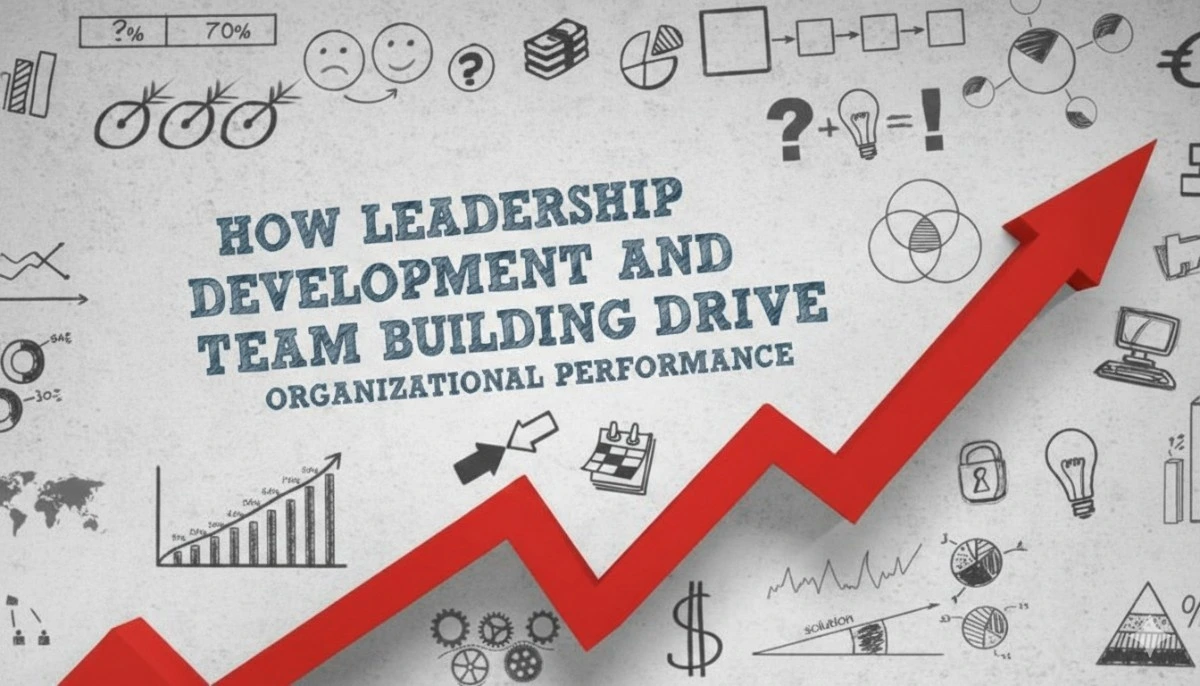
Introduction: Why Leadership and Team Building Are the True Engines of Organizational Growth
In a rapidly evolving business environment, one factor remains timeless: the strength of your leadership and the synergy of your teams. Organizations that invest in leadership development training and structured team-building training programs consistently outperform those that don’t. Why? Because great leaders create great teams—and great teams are the lifeblood of high organizational performance.
Modern businesses face complex challenges: talent retention, innovation fatigue, hybrid work models, and cross-functional alignment. In this scenario, a leader’s ability to inspire, coach, and align people becomes a strategic advantage. This is where SLII® leadership model shines—by empowering leaders to adapt their style based on each team member’s readiness, it enhances trust, accountability, and output.
But leadership alone isn’t enough. True impact happens when leadership is combined with targeted team-building training programs that encourage collaboration, communication, and shared ownership. These programs help people realise their full potential, connect with one other, and find a common goal, all of which are important for better team performance.
The Arbinger Institute says that companies that pay attention to how their leaders think and how their teams work together find big gains in engagement, flexibility, and strength. When teams feel seen, supported, and strategically aligned, their ability to innovate and execute skyrockets—resulting in measurable gains in organizational performance.
In this blog, we’ll explore:
- The true value of leadership development training
- How team building training programs elevate team performance
- Why the SLII® leadership model is a game-changer
- A real-world case study of Milltronics, a company that transformed its outcomes through strategic leadership and team-based development
Let’s break down how investing in your people—from the executive level to the front line—can fuel long-term success.
The Role of Leadership Development in Team and Organizational Performance
Leadership isn’t just about authority—it’s about influence, vision, and the ability to bring out the best in others. In today’s dynamic workplaces, investing in leadership development training is one of the most impactful decisions a company can make to improve both team performance and overall organizational performance.
Leaders directly shape a team’s culture, motivation, and output. When leadership is inconsistent or misaligned, it can create confusion, reduce morale, and fracture communication. On the other hand, when leaders are trained in adaptive models like SLII® leadership model, they’re better equipped to lead with clarity, flexibility, and emotional intelligence.
SLII® leadership model is particularly effective because it teaches leaders how to assess the competence and commitment of their team members and then adapt their leadership style accordingly. For instance, new or less experienced employees may need more directive support, while seasoned staff thrive under a more delegating approach. This level of leadership flexibility ensures that each team member is guided in a way that maximizes their individual and collective contribution—resulting in stronger team performance and faster project cycles.
As referenced by The Arbinger Institute, organizations that prioritize leader development often experience:
- Stronger collaboration and cross-functional alignment
- Higher employee engagement
- Faster decision-making
- Greater resilience during change or crisis
More importantly, these outcomes have a measurable impact on organizational performance. When leaders are trained not only to manage but to coach and empower, they unlock discretionary effort within teams—boosting productivity, innovation, and long-term retention.
Training for effective leadership also builds internal pipelines, which means that the company doesn’t have to rely as much on hiring people from outside and encourages a culture of growth from within. This upward mobility within the company stimulates teams and helps everyone at every level work towards the same strategic goals.
To truly scale performance, organizations must treat leadership development not as a one-time initiative, but as a continuous journey that’s deeply embedded in their culture.
How Team Building Training Programs Improve Team Performance
While leadership drives direction, it’s team dynamics that fuel execution. No matter how visionary a leader may be, they rely on cohesive, motivated teams to bring strategy to life. That’s why team building training programs are critical in strengthening team performance and aligning daily operations with strategic goals.
These programs are more than just ice-breakers or retreats. Done right, they’re structured experiences designed to foster trust, improve communication, build psychological safety, and clarify roles and interdependencies. Teams that undergo training together develop deeper awareness of each other’s strengths, communication styles, and problem-solving approaches—eliminating friction and enabling flow.
Research, including ideas from The Arbinger Institute, demonstrates that compartmentalised behaviour and conflict inside an organisation are two of the biggest things that get in the way of good performance. Team-building training breaks down these walls and encourages empathy, shared responsibility, and true teamwork. Team performance improves when trust is the norm instead than the exception.
At the tactical level, these programs help:
- Make sure your own ambitions are in line with the team’s aims.
- Make plans on how to deal with conflicts
- Promote a culture of feedback and open communication
- Increase interest and drive
- Make sure everyone knows what you anticipate and what you all value.
These advantages grow to have an effect on how well an organisation does. Cross-functional synergy makes projects go faster, cuts down on misunderstandings, and helps people make better decisions. In a well-aligned team, members don’t just complete tasks—they anticipate needs, step up for each other, and innovate collaboratively.
When paired with leadership strategies like SLII® leadership model, team building becomes even more powerful. Leaders learn how to support team growth while team members learn how to support each other—creating a mutually reinforcing loop of accountability and support.
Smart organizations no longer see team building training programs as optional. They view them as strategic investments that reduce turnover, increase productivity, and foster a culture of trust and innovation.
Embedding Leadership and Team Development into Organizational Culture
The most effective organizations treat leadership development training and team building training programs not as events, but as ongoing processes integrated into their culture. It’s not about a workshop here or a retreat there—it’s about reinforcing leadership principles and collaborative values through everyday behaviors and systems.
To do this, companies must align their leadership expectations with performance evaluations, onboarding frameworks, learning systems, and feedback loops. For instance, SLII® leadership model should be more than a concept taught in training—it must become a lens through which managers assess, coach, and grow their team members.
Here’s how organizations can embed these efforts long-term:
- Ongoing Learning Cycles: Use quarterly leadership check-ins, coaching circles, or micro-learning modules to reinforce key skills.
- Leadership KPIs: Integrate people-centric metrics into leadership scorecards (e.g., team engagement, collaboration quality, growth potential).
- Leadership in Onboarding: New hires should immediately be exposed to leadership and teamwork expectations from day one.
- Recognition Systems: Celebrate not just individual success but also examples of exceptional team performance and collaboration.
- Cross-Team Exposure: Rotate leaders across departments to build systems thinking and break down silos.
When leadership development training is woven into daily routines and decisions, it stops being an “extra” and becomes essential to how work gets done. Similarly, when employees are regularly engaged in team building training programs, trust and alignment grow stronger—and so does their commitment to shared outcomes.
Ultimately, organizations that operationalize these efforts experience more consistent, scalable, and sustainable organizational performance across time and teams.
Read More – Mastering SLII® Model: A situational approach to leadership guide
Common Pitfalls to Avoid in Leadership and Team Development Programs
While leadership development training and team building training programs are vital, they’re not automatically effective. Many organizations invest time and resources into these initiatives, only to see limited or short-lived results. Why? Because of common pitfalls that prevent these programs from sticking or scaling.
Here are some of the biggest traps to avoid:
1. Treating It as a One-Time Event
Leadership isn’t built in a day. Many companies run a one-off workshop and expect cultural transformation. Without continuous reinforcement, even the most powerful models—like SLII® leadership model—fade from memory. Ongoing development, coaching, and application are critical.
2. Lack of Executive Buy-In
If senior leaders don’t walk the talk, no one else will either. When executives fail to model collaborative behavior or support learning efforts, employees disengage. The Milltronics case study proves the opposite: their transformation started because the president and executive team led by example.
3. Misalignment Between Training and Business Goals
Leadership and team training should serve real organizational needs—not just check a box. Programs disconnected from strategy, performance metrics, or operational realities often fall flat. Tie development directly to current business challenges for relevance and traction.
4. No Measurement or Feedback Loops
If you’re not measuring outcomes, how do you know what’s working? Track changes in team performance, engagement, retention, and other KPIs tied to organizational performance. Use feedback to improve future training.
5. Ignoring the Team Context
Sometimes leadership training focuses too much on individual traits and not enough on the team ecosystem. In reality, sustainable impact comes from aligning individual leaders and team dynamics together.
To avoid these pitfalls, organizations should view leadership development training and team building training programs as interdependent, evolving systems—not isolated events. With the right intent, integration, and investment, the results can be powerful and permanent.
Elevate Leadership. Strengthen Teams. Transform Performance.
Discover how powerful leadership development and strategic team-building initiatives can reshape the way your organization collaborates, grows, and achieves results. Begin your journey toward a more aligned, empowered, and high-performing workforce.
Contact UsCase Study: Milltronics – Leadership and Team Building in Action
Milltronics, a global leader in industrial level-measurement instrumentation, exemplifies how strategic leadership development training and team building training programs can drive measurable improvements in organizational performance.
Milltronics had a good reputation, but it had problems within the company, such as poor communication, regional silos, a lack of responsibility, and conflicting agendas. Leadership knew that for the company to be successful in the long run, it needed more than just new technology. It needed a change in culture from the top down.
To address this, Milltronics partnered with The Ken Blanchard Companies and embraced the SLII® leadership model. This model equipped leaders to diagnose employee development levels and apply situational approach to leadership styles—fostering engagement, clarity, and empowerment.The leadership team was taught to replicate this behaviour throughout the organisation, which created a ripple effect of leadership that was in line with the company’s principles.
At the same time, the organisation started offering full team-building training programs. The goal of these projects was to make it simpler for people from different departments to work together, encourage open communication, and bring people from different regions of the world together. The objective was to turn into a team-based, process-driven company that put the needs of its customers first and always looked for ways to improve.
The results were amazing:
- Collaboration replaced rivalry inside the company.
- Communication across departments and locations improved significantly
- Cycle times were reduced by 50%
- Employee alignment with vision and strategy grew stronger
- Leadership became a shared responsibility, not just a title
By making leadership and teamwork cultural priorities, Milltronics transformed not only how their teams worked, but how they thought. Employees at all levels were empowered to contribute, take ownership, and innovate—leading to sustained growth and enhanced team performance and organizational performance.
This case study underscores that technical excellence must be matched by people excellence. With the right models and training in place, any organization can turn internal challenges into strategic breakthroughs.
Long-Term Benefits and Measurable Outcomes of Leadership and Team Training
Organizations that consistently invest in leadership development training and team building training programs experience transformational benefits that extend far beyond short-term gains. These interventions cultivate a workplace culture rooted in trust, clarity, and accountability—key ingredients for sustained organizational performance.
1. Boosted Team Agility and Resilience
With stronger leadership comes stronger teams. Leaders trained in models like SLII® leadership model are equipped to assess challenges, adapt styles, and keep teams engaged through uncertainty. This adaptability leads to more agile, responsive, and resilient teams that maintain performance under pressure—ultimately improving long-term team performance.
2. Improved Engagement and Retention
When employees know they have strong leaders and work with teams that work well together, they are more likely to be engaged. A well-implemented leadership development training framework makes it clear how to improve and move up in the company, which lowers turnover and builds loyalty.
3.Increased Operational Efficiency
In the Milltronics case study, cycle times went down by 50% because communication and collaboration across different departments improved. When leaders and teams work together with a common goal, waste goes down, decisions are made faster, and production increases. These efficiencies have a direct effect on performance measures for organisations, such as lowering costs, getting products to market faster, and increasing project success rates.
4. Elevated Collaboration Across Functions
Team building training programs are especially powerful in breaking down silos and improving trust. Cross-team initiatives become easier to execute, conflict is resolved constructively, and employees operate with a collective mindset. This cultural alignment is invaluable in today’s hybrid and remote work environments.
5. Continuous Learning Culture
It’s not only a course to learn how to be a leader; it’s a way of thinking. Companies that make leadership development training a part of their culture encourage people to keep becoming better, think about things, and share what they know. These attributes empower employees at every level to lead initiatives, own responsibilities, and contribute strategically.
These long-term results don’t simply improve the performance of the team; they also improve the performance of the whole organisation. When every team is aligned, every leader empowered, and every employee supported, the result is a high-functioning system built for growth, innovation, and excellence in organizational performance.
Read More – The importance of leadership development in modern business
Conclusion: Empowering People to Drive Performance
In every successful organization, people are the engine. But without direction, support, and structure, even the best talent can fall short of its potential. That’s why integrating leadership development training and team building training programs is not just good HR policy—it’s a growth strategy.
We’ve seen how leadership impacts team performance, and how structured collaboration enhances organizational performance. SLII® leadership model equips leaders to meet teams where they are, while team-building efforts create the trust, communication, and resilience needed to thrive.
Milltronics shows that people, not just products, are what really change things. They cut down on operational bottlenecks, increased alignment, and spread excellence across all of their worldwide sites by investing in their leaders and teams.
If your organization is ready to improve accountability, boost collaboration, and achieve measurable gains in organizational performance, the time to act is now.
FAQs
Leadership Development Training is a planned process to improve the leader’s influence, coaching, and guiding capabilities. It is a very important process because effective leadership has a direct impact on team performance and organizational performance. Organizations that invest in leadership development training perform better in succession planning, employee engagement, and operational efficiency.
Team building training programs increase trust, communication, and teamwork among team members. By understanding each other’s roles, resolving conflicts in a constructive manner, and achieving common goals, team building training programs remove friction and generate synergy. When teams work together as a cohesive unit, team performance improves dramatically, resulting in improved organizational performance.
Organizational performance is affected in a positive manner by leadership development training due to its ability to enhance the speed of decision-making, build accountability, increase engagement, and promote innovation. When leaders are trained to coach and empower instead of managing, they are able to tap into the discretionary effort of teams, leading to improvements in productivity and retention.
Yes. Modern team-building training solutions are created to deal with hybrid collaboration issues, digital fatigue, and cross-functional coordination. Organized team interventions assist in keeping remote and distributed teams in sync, fostering trust and shared ownership to ensure team performance irrespective of geographical separation.
Organizations can also incorporate leadership development training into their culture by including leadership KPIs in performance processes, reinforcing learning through coaching cycles, incorporating leadership principles into onboarding processes, and aligning development initiatives with strategic business objectives. Leadership development should be viewed as a journey and not an event.
Some common pitfalls that may be encountered include treating leadership development training as a one-time workshop, a lack of buy-in from executives, a lack of measurement of results, and a lack of alignment of training with business goals. Improving team and organizational performance is a continuous process.
Organizations that invest in leadership development training and team building training programs will see improvements in employee engagement, decision-making speed, cycle times, retention, and innovation. These improvements will add up over time to create sustainable organizational performance.